
2026-10-06 · Carlos Mendoza
How to Clear a Kitchen Sink Clog in 33611 Homes
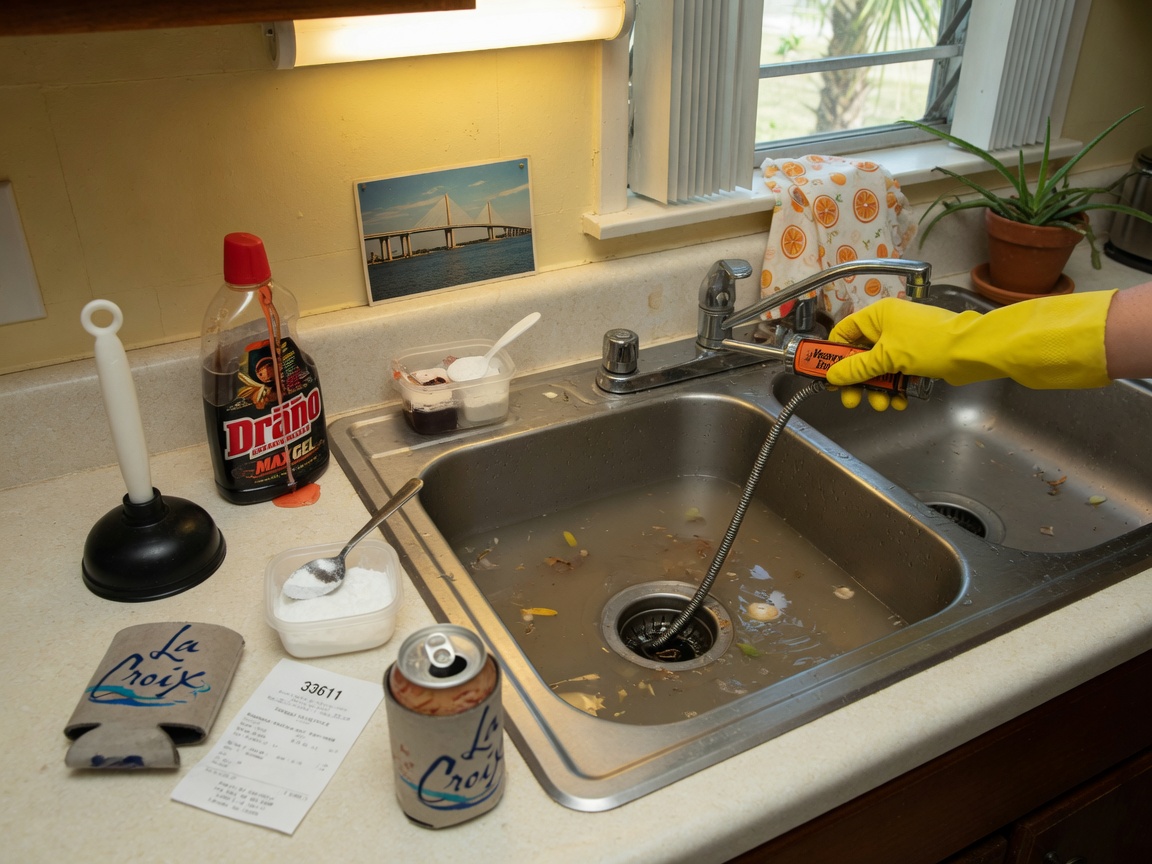
Kitchen sink clogs in 33611 homes can typically be cleared in 30 to 90 minutes using basic tools if the blockage sits within the first 10 feet of the trap or branch line. Older housing stock in neighborhoods like Palma Ceia features narrower 1.5-inch pipes that trap food particles and grease more readily than modern installations. Start by removing the trap and checking for visible debris before moving to mechanical methods.
Common Causes in 33611 Homes
Homes built before 1980 in the 33611 zip code often have cast iron or galvanized steel drain lines that corrode over decades and collect grease films from frequent cooking. Heavy seasonal rains in Hillsborough County push additional sediment into lines through roof drains or yard connections, narrowing the effective diameter. Food scraps like rice, coffee grounds, and cooking oils combine with this corrosion to form stubborn plugs right below the sink. Tree roots from mature oaks common in Bayshore and West Tampa yards can also intrude at joints, though kitchen lines see this less often than main sewer laterals.
Residents in these areas report recurring issues after holiday cooking because the sudden volume of fats overwhelms aging pipes that already carry reduced flow capacity. Checking the cleanout access points located near the foundation helps confirm whether the clog remains localized to the kitchen branch.
Tools and Safety Steps Before Starting
Gather a 16-inch adjustable wrench, a 25-foot drain snake, a bucket, and rubber gloves before removing any fittings. Turn off the disposal if present and run hot water for two minutes to soften grease. Place the bucket under the trap to catch water and debris. Avoid chemical drain cleaners in 33611 homes with older pipes because they accelerate corrosion on already thin metal walls and can create hazardous fumes in the humid climate.
Wear eye protection when working under the sink, as rusted fittings can break and release pressurized water. These precautions prevent minor clogs from turning into larger leaks that require replacing sections of pipe.
Step-by-Step Clearing Process
Remove the P-trap and clean it thoroughly with a wire brush to eliminate the initial buildup. Feed the drain snake into the wall stub-out while rotating the handle clockwise, advancing no more than 6 inches at a time until resistance drops. Withdraw the cable slowly to pull out the clog material rather than pushing it deeper. Flush with hot water for five minutes afterward to verify flow. If the line still drains slowly after two attempts, the blockage likely sits farther downstream in the branch serving multiple fixtures.
For recurring kitchen clogs tied to pipe age, review factors that extend clearing time in older Tampa properties before attempting more aggressive methods.
When DIY Methods Fall Short
If the clog returns within a week or multiple drains slow simultaneously, the issue has moved past the kitchen branch into the main line. In 33611 homes this often indicates buildup in the 4-inch sewer lateral where roots or collapsed sections restrict flow. At that point, professional drain camera inspection locates the exact problem without repeated digging. Homeowners in Riverview and Brandon frequently reach this stage after years of partial clogs that were only pushed downstream.